Beer
Dutch Beer Guide: Brands, Breweries and What to Try
Dutch beer is far more than the pale lager the Netherlands exports around the world: alongside big brands such as Heineken, Amstel, Grolsch, Bavaria, Hertog Jan, Brand and Alfa, the country has a Trappist brewery, a thriving craft scene and seasonal styles such as bokbier. If you want to know which Dutch beer brands to try, which Dutch breweries are worth seeking out and how to order like a local, this guide covers it all.
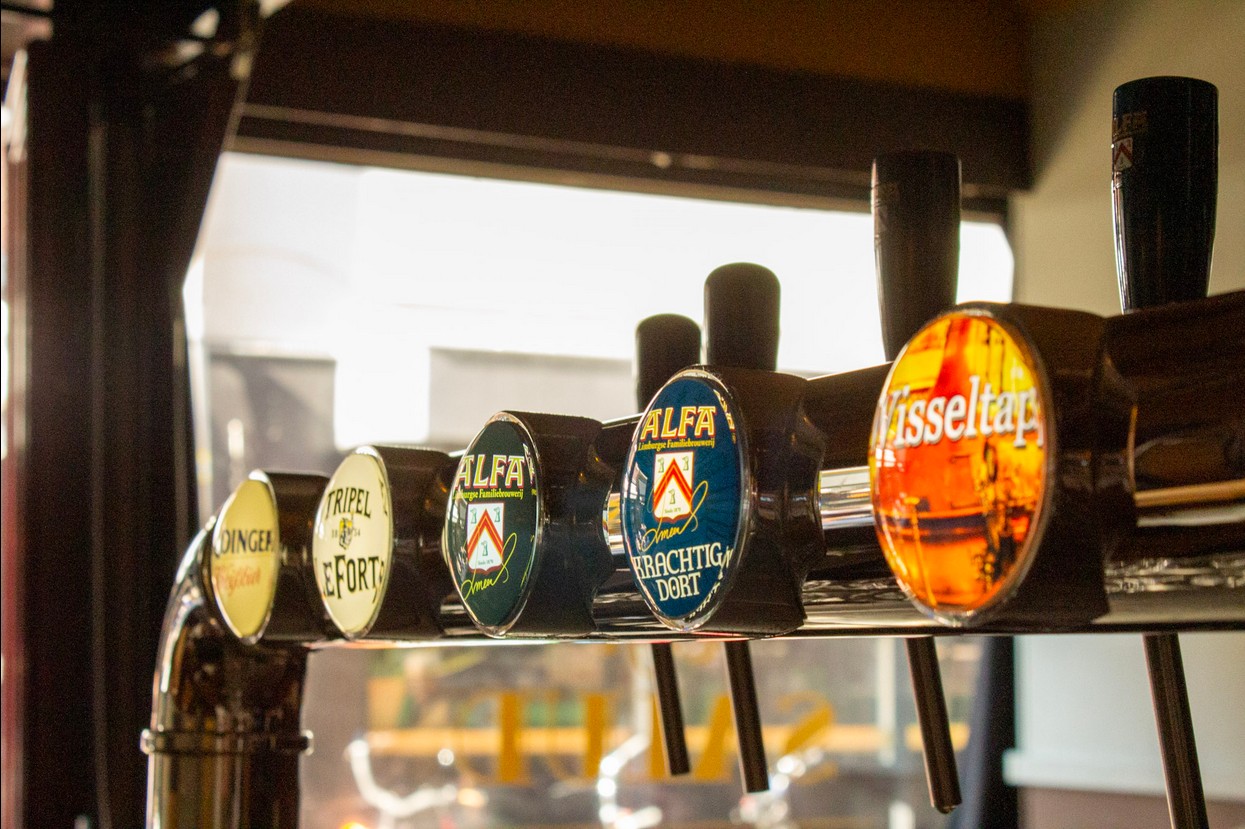
We are Cafe Salud, a brown cafe on the Carolieweg in Groningen, a short walk from the Grote Markt. We are the only cafe in the north of the Netherlands with Alfa on tap, and we run beer tastings for groups of locals and internationals, often in English. Below you will find a short history of beer in the Netherlands, the big brands and who owns them, Dutch Trappist beer, the craft breweries behind the modern Dutch IPA, a guide to Dutch beer styles and seasonals, how to taste beer properly, and the unwritten rules of ordering a beer in a Dutch cafe.
Dutch beer in one minute
If you are short on time, here is the essence. Most beer drunk in the Netherlands is pils, a crisp, pale, bottom-fermented lager served in small glasses with a generous head of foam. The best-known Dutch beer brands are pils brands, and several of them belong to large international groups. But the Netherlands is also a country of specialty beer, or speciaalbier: witbier, blond, dubbel, tripel, IPA and stout, many of them brewed by small independent breweries. The Dutch Trappist brewery La Trappe makes some of the most respected strong ales in the country, and every autumn cafes celebrate bokbier season.
For a visitor, the most useful tip is simple: try at least one pils from the tap and one specialty beer. The contrast tells you a lot about Dutch beer culture.
A short history of beer in the Netherlands
Beer has been brewed in the Low Countries for many centuries. Brand, in the village of Wijlre in South Limburg, traces its brewing history back to 1340 and is often described as the oldest brewery in the Netherlands. Many Dutch towns once had their own breweries, and old beer recipes are still being revived today, as the Haarlem brewery Jopen has done with recipes from its city's archives.
The modern story of Netherlands beer begins in the 19th century. In 1864 Gerard Adriaan Heineken bought De Hooiberg, an Amsterdam brewery dating from 1592, and during the 1870s the company switched from traditional top-fermented beer to Bavarian-style bottom-fermented lager. Amstel was founded in Amsterdam in 1870, as was the Alfa brewery in Limburg. Over the following century pale lager became the national drink, and a small number of large brewers came to dominate the market.
The last two decades have changed that picture completely. According to Statistics Netherlands (CBS), the number of brewers rose from 90 in 2007 to around 370 in 2017, most of them microbreweries. By the start of 2021, figures from the Dutch Chamber of Commerce put the number at 923. Counts differ depending on how you define a brewery, but the trend is clear: there are now more Dutch breweries than at any time in living memory.
The big Dutch beer brands
These are the Dutch beer brands you will see on almost every terrace and in every supermarket. Most are best known for their pils, although nearly all of them also brew other styles.
| Brand | Home | Roots | Owner today |
|---|---|---|---|
| Heineken | Amsterdam origins, brewed in Zoeterwoude and 's-Hertogenbosch among others | 1864 | Heineken N.V. |
| Amstel | Amsterdam, named after the river Amstel | 1870 | Heineken (since 1968) |
| Grolsch | Founded in Groenlo, now brewed in Enschede | 1615 | Asahi (since 2016) |
| Bavaria | Lieshout, North Brabant | First mentioned in 1719 | Swinkels family |
| Hertog Jan | Arcen, Limburg | Arcen brewery renamed Hertog Jan in 1998 | AB InBev |
| Brand | Wijlre, South Limburg | Brewing since 1340 | Heineken (since 1989) |
| Alfa | Thull, Schinnen, Limburg | 1870 | Meens family |
Heineken is the most famous Dutch beer in the world. The original Amsterdam brewery closed in 1988 and is now the Heineken Experience, a visitor attraction. Amstel was Heineken's big rival for almost a century before Heineken bought it in 1968. Grolsch takes its name from Grolle, the old name of Groenlo, and is known for its swing-top bottle. The brewery moved its main production to Enschede, and since 2016 Grolsch has been owned by the Japanese brewer Asahi.
Bavaria comes from Lieshout in North Brabant, where a brewery is first mentioned in 1719. It has been run by the Swinkels family for generations, and in 2018 the company was renamed Swinkels Family Brewers, while the beer kept the Bavaria name. Hertog Jan, brewed in Arcen in Limburg, is popular in Dutch cafes for its pils and its range of specialty beers, and is part of AB InBev. Brand, from Wijlre, is one of the few Dutch brands with medieval roots and has been part of Heineken since 1989.
Alfa: the independent family brewery from Limburg
Alfa deserves its own section, partly because we love it and partly because its story is unusual. The brewery was founded in 1870 by Joseph Meens in Thull, a hamlet in Schinnen in the hills of South Limburg, and it is still run by the Meens family. It is one of the few independent breweries left in the province.
What sets Alfa apart is its water. The brewery uses spring water from its own officially recognised source, and says it is the only brewery in the Netherlands with 100% natural spring water from such a source. According to Alfa, the water fell as rain thousands of years ago and has been filtered through layers of chalk and marl. Because that supply is limited, so is the amount of beer they can brew.
The two Alfa beers we pour at Cafe Salud are:
- Alfa Edelpils: a clean, crisp pils with a bit more character than the average lager. Brewed with barley malt, spring water, hops and yeast.
- Alfa Krachtig Dort: fuller, maltier and stronger. Alfa describes it as one of the very first specialty beers in the Netherlands, based on a recipe from 1953.
Both have won medals in recent years, and both taste noticeably different from the tap than from the bottle. Cafe Salud is the only cafe in the north of the Netherlands with Alfa on tap, so if you are in Groningen it is worth a detour. You can read more in our Dutch-language article on Alfa on tap in Groningen (in Dutch).
Dutch Trappist beer: La Trappe and Zundert
Trappist beer is brewed by or under the supervision of Trappist monks, inside the walls of their monastery. Only beers that meet strict rules may carry the "Authentic Trappist Product" logo. Most Trappist breweries are in Belgium, but the Netherlands has a famous one of its own.
La Trappe is brewed at the De Koningshoeven brewery inside the Koningshoeven Abbey in Berkel-Enschot, near Tilburg. Monks from northern France settled there in 1881 and started brewing in 1884. The brewery went through a period without the Trappist logo after a partnership with Bavaria, and regained the right to use it in 2005. Today it is the only Dutch Trappist brewery. La Trappe brews a broad range, from blond and witbier to dubbel and tripel, and its best-known beer is probably the La Trappe Quadrupel, a strong, dark, bottle-conditioned ale of 10%.
Zundert was the second Dutch Trappist beer. It was brewed by the De Kievit brewery at the Abbey Maria Toevlucht in Zundert, which received Trappist recognition in December 2013. The original Zundert, at 8%, was later joined by the stronger Zundert 10. In 2025, however, the abbey announced that it would close because of the age and small number of its monks, and the beer lost its Trappist label as a result. If you spot a bottle of Zundert Trappist, you are looking at a piece of recent Dutch brewing history.
Dutch craft breweries worth knowing
The craft boom produced hundreds of new Dutch breweries. These are some of the names that shaped the scene and that you are most likely to see on beer lists, along with two from our own city.
| Brewery | City | Known for |
|---|---|---|
| Brouwerij 't IJ | Amsterdam | Founded in 1985 next to the De Gooyer windmill. Zatte, Natte and Columbus |
| Jopen | Haarlem | Revived historic Haarlem recipes. Brewery and cafe in a former church, the Jopenkerk |
| Uiltje | Haarlem | Founded in 2012, known for hoppy beers with modern American hops |
| De Molen | Bodegraven | Influential windmill brewery known for imperial stouts. Brewing stopped in October 2025 |
| Brouwerij Martinus | Groningen | City-centre brewery near the Grote Markt, brewing since 2015 |
| Bax Bier | Groningen | Experimental beers and a tasting room on the Friesestraatweg |
Brouwerij 't IJ is one of the pioneers. Musician Kaspar Peterson started it in 1985 in a former bathhouse beside De Gooyer, one of Amsterdam's best-known windmills. Its first beer was the Zatte, a tripel, and beers such as the Natte and the hoppy Columbus became classics of the Dutch scene.
Jopen grew out of a Haarlem beer society founded in 1992 to bring back old Haarlem beers, starting with recipes from the city archives. The name refers to the large barrels once used in the city's beer trade. In 2010 the brewery opened the Jopenkerk, a brewery, cafe and restaurant in a converted church in central Haarlem.
Uiltje was founded in Haarlem in 2012 by Robbert Uyleman, who first brewed at Jopen. Uiltje became known for bold, hoppy beers and opened its own brewery in 2016. In 2021 it was taken over by Swinkels Family Brewers.
De Molen in Bodegraven, founded in 2004 by Menno Olivier in a 17th-century windmill, built an international reputation with imperial stouts such as Hel & Verdoemenis and inspired many younger Dutch brewers. Its owner, Swinkels Family Brewers, stopped production in Bodegraven on 1 October 2025, so the brewery is now part of the history of Dutch craft beer rather than its present.
Breweries in Groningen
You do not have to travel to Amsterdam or Haarlem to drink local craft beer. Groningen has its own breweries. Brouwerij Martinus has been brewing in a former print shop on the Kostersgang, near the Grote Markt, since 2015, and has a roof terrace with a view of the Martinitoren. Its range runs from blond to quadrupel, and its "Nuchter" beer is a nod to the down-to-earth Groningen character. Bax Bier brews on the Friesestraatweg and is known for playful, experimental beers. The Groningse Bierbrouwerij brews GRUNN beer, which you will find in shops across the Netherlands.
Exploring the city? Our guide to things to do in Groningen combines these breweries with the best bars, sights and nightlife, and makes an easy beer route through the centre.
Dutch beer styles explained
Dutch brewers draw on German, Belgian, British and American traditions, so a Dutch beer list can look a little overwhelming at first. This table covers the styles you will meet most often. Alcohol levels vary by brewery, so treat the ranges as a rough guide.
| Style | Colour | Taste | Strength |
|---|---|---|---|
| Pils | Pale gold | Crisp, clean, lightly bitter | Usually around 5% |
| Witbier | Pale and cloudy | Fresh, citrus and coriander, soft wheat body | Usually around 5% |
| Blond | Golden | Fruity, a little fuller than pils | Often 6 to 7% |
| Dubbel | Dark brown | Malty, caramel, dried fruit | Often 6 to 8% |
| Tripel | Deep gold | Spicy, fruity, warming | Often 8 to 10% |
| Quadrupel | Dark amber to brown | Rich, sweet malt, dark fruit | Around 10% or more |
| Bokbier (herfstbok) | Amber to dark brown | Malty, bittersweet, sometimes caramel or roast | Often 6 to 8% |
| Lentebok | Mostly pale to amber | Soft, bready, fruity malt | Often 6.5 to 7.5% |
| Oud bruin | Dark | Mild and malty | Low, often below 3.5% |
| IPA | Gold to amber | Pronounced hop aroma and bitterness | Often 5.5 to 7.5% |
Pils is the everyday Dutch beer: you order it without thinking, and it arrives quickly in a small glass. Witbier is the cloudy wheat beer flavoured with coriander and orange peel, revived in Belgium by Pierre Celis in 1966 and now brewed by many Dutch breweries. Dubbel and tripel come from the abbey tradition of Belgium and the Netherlands: the dubbel dark and malty, the tripel golden, spicy and strong. Quadrupel goes further still, and La Trappe's version is one of the best known.
The Dutch oud bruin deserves a special mention because the name is confusing. In the Netherlands it means a dark, low-alcohol beer; Heineken's Oud Bruin, for example, is 2.5%. It shares only its name with the stronger, sour oud bruin beers of Belgium. Alfa, Brand and Gulpener also make Dutch-style versions. For a deeper explanation of each style, see our article on beer styles explained (in Dutch).
Seasonal beers: bokbier in autumn, lentebok in spring
If you are in the Netherlands in autumn, you will notice bokbier everywhere. It is the most Dutch of seasonal traditions. Bok was traditionally brewed in autumn and drunk from around October, and Dutch herfstbok (autumn bock) is typically dark, malty and bittersweet. The name goes back to the German town of Einbeck, where the bock style originated. PINT, the Dutch beer consumers' association, organises the Bokbierfestival in Amsterdam, often described as the biggest beer festival in the country, and cafes all over the country put several bocks on their lists at the same time.
In spring it is the turn of lentebok (spring bock), also known as meibock. Modern lentebok is mostly pale, with a soft, bready and fruity malt character. Hertog Jan's Lentebock, at 7.2%, is one widely available example, and Utrecht hosts a Lentebock Festival each spring. Many breweries also release summer beers and winter warmers, which makes the Dutch beer calendar a good excuse to keep coming back to your local cafe.
The Dutch IPA and the new wave
For many younger drinkers, the Dutch IPA is now as familiar as pils. The craft breweries of the 2000s and 2010s took inspiration from the United States and the United Kingdom and started brewing beers built around hops: pale ales, IPAs, double IPAs and hazy New England styles. Uiltje is a good example, with a founder who used modern American hops whenever he could get them, and Brouwerij 't IJ's Columbus showed early on that Dutch brewers could do bold and hoppy.
What makes a good Dutch IPA? Look for a fresh hop aroma of citrus, tropical fruit or pine, balanced bitterness and a dry finish. IPAs are best drunk fresh, so a busy beer bar with a good turnover is the ideal place to try them. If you find a regular IPA too bitter, try a pale ale or a session IPA first, then work your way up.
Best Dutch beer to try: a starter list
Asking "what is the best Dutch beer?" is a bit like asking for the best cheese: it depends on what you like. Use this table as a starting point and follow your taste.
| If you like... | Try this Dutch beer or style | Why |
|---|---|---|
| Light, crisp lager | Alfa Edelpils from the tap | A clean pils with real character |
| Something fuller but still smooth | Alfa Krachtig Dort | Maltier and stronger, a Dutch specialty beer classic |
| Fresh and fruity | A Dutch witbier | Light, cloudy, with citrus and spice |
| Strong and spicy | A tripel such as 't IJ Zatte | Golden, fruity and warming |
| Rich and dark | La Trappe Quadrupel | The best-known Dutch Trappist ale |
| Hops, hops, hops | A Dutch IPA, for example from Uiltje | Big aroma and a bitter, dry finish |
| Seasonal tradition | A bokbier in autumn | The classic Dutch autumn beer |
At Cafe Salud you will find Alfa Edelpils and Alfa Krachtig Dort on tap, Tripel LeFort, and a changing selection of specialty beers. Ask at the bar and we will happily point you to something that matches what you normally enjoy.
How to taste beer like a pro
Beer tasting is not about fancy vocabulary. It is about paying attention. Whether you are at a guided tasting or simply trying a new beer, look at five things:
- Colour: hold the glass against the light. Pale, golden, amber, brown or black already tells you something about the malt.
- Aroma: swirl gently and smell. Do you get bread, caramel, fruit, flowers, citrus, spice or roast?
- Taste: take a proper sip and let it cover your tongue. Notice sweetness, bitterness and any sourness, and how they balance.
- Mouthfeel: is it light or full, sparkling or soft, thin or creamy?
- Finish: what stays behind after you swallow, and for how long?
A few practical tips help a lot. Taste from light to heavy, so a strong dark beer does not overpower a delicate pils. Serve lighter beers colder, roughly 4 to 6 degrees for a pils or witbier, and let heavier beers such as tripels and dubbels warm up a little, to around 8 to 12 degrees, so their aromas open up. Drink water in between, and have something to eat.
The easiest way to learn is side by side, in small portions. That is exactly how our guided beer tasting in Groningen works: for groups from six people, you taste 4 to 6 beers in 10 to 15 cl portions over about two hours, with a Groningen sharing board and an explanation of every beer. Tastings can be guided in English and start from €15 per person. With one or two people, you can simply walk in for a tasting board.
Ordering beer in a Dutch cafe
Ordering a beer in the Netherlands is easy once you know a few words. The default is pils from the tap, served in a small glass, so if you just ask for "een biertje" (a beer) you will almost always get a pils. Many visitors are surprised by the size: a standard Dutch beer glass is much smaller than a British pint.
| What you say | What it means | What you get |
|---|---|---|
| Een biertje, alsjeblieft | A beer, please | Usually a pils from the tap |
| Een pilsje | A (small) pils | The standard glass of draught lager |
| Een vaasje | A "little vase" | A conical glass, most commonly about 25 cl |
| Een fluitje | A "little flute" | A tall, narrow glass of around 20 cl |
| Wat heb je van de tap? | What do you have on tap? | A list of the draught beers |
| Proost! | Cheers! | Clinking glasses and eye contact |
Why so much foam? The head of foam is not a sign of a stingy bartender. In Dutch cafes the convention is a head of about two fingers. A pils is usually tapped with the glass held at an angle, then straightened, and the foam is often skimmed flat with a special skimmer so the head is neat and straight. The foam acts like a lid that helps keep the carbonation in the beer, so it stays fresh for longer. A Dutch pils without a head looks unfinished to most locals.
Rounds and pace. In groups it is common to take turns buying rounds. Because the glasses are small, the beer stays cold and fresh, and you can drink at your own pace. When you want something special, ask for the specialty beer list: specialty beers are usually served in their own glass, often at a slightly higher temperature.
Dutch beer versus Belgian beer
Visitors often ask how Dutch beer differs from Belgian beer. Broadly speaking, the Belgian classics lean on centuries-old traditions: yeast character, spice, abbey styles such as dubbel and tripel, and a rounder, sometimes sweeter profile. Dutch beer culture is built on pils, with a younger and more experimental craft scene that draws on American and British influences as much as Belgian ones. The two overlap a great deal, and many Dutch breweries brew excellent Belgian-style beers.
A fun way to explore the difference is to taste them side by side: a Dutch blond next to a Belgian one, or a Dutch tripel next to a Belgian tripel such as the Tripel LeFort we pour. Same style on paper, often a clearly different character in the glass. "Belgium vs. the Netherlands" is also one of the most popular themes for our group tastings.
Where to drink Dutch beer in Groningen
Groningen is a great city for beer. The centre is compact, so you can walk between brown cafes, beer cafes and brewery taprooms in minutes. Brouwerij Martinus near the Grote Markt and Bax Bier on the Friesestraatweg brew locally, and there are well-known beer cafes with long lists of Dutch and Belgian beers.
At Cafe Salud, Carolieweg 31, you will find the only Alfa taps in the north of the Netherlands, Tripel LeFort and a changing range of specialty beers, in a classic brown cafe with room for 49 guests. We are a meeting place for locals and internationals, and we are open Tuesday to Thursday from 15:00 to 23:00, Friday from 15:00 to midnight, Saturday from 14:00 to midnight and Sunday from 15:00 to 19:00. We are closed on Mondays.
Living in Groningen or staying for a while as a remote worker? Beer is only one part of settling in. For a full living guide for remote workers, with costs, neighbourhoods and coworking spaces, see The Nomad HQ's Groningen guide.
Frequently asked questions
What is the most popular Dutch beer?
Pils is by far the most popular style of beer in the Netherlands, and Heineken is the best-known Dutch beer brand worldwide. Other major Dutch beer brands include Amstel, Grolsch, Bavaria, Hertog Jan, Brand and Alfa.
Which Dutch beer brands are still family-owned?
Alfa, from Schinnen in Limburg, is run by the Meens family and is one of the few independent breweries left in the province. Bavaria is brewed by Swinkels Family Brewers, a family company. Heineken is a listed company, while Amstel and Brand belong to Heineken, Grolsch to Asahi and Hertog Jan to AB InBev.
Is there a Dutch Trappist beer?
Yes. La Trappe is brewed at the De Koningshoeven brewery inside the Koningshoeven Abbey in Berkel-Enschot, near Tilburg, and is the only Dutch Trappist brewery today. Zundert, brewed at the Abbey Maria Toevlucht, was recognised as Trappist in 2013 but lost the label after the abbey announced its closure in 2025.
What is bokbier?
Bokbier is a seasonal Dutch beer. The autumn version, herfstbok, is usually dark, malty and bittersweet and appears in cafes from around October. In spring, many breweries release a lentebok, which is mostly paler, with a soft and bready malt character.
What is the difference between a vaasje and a fluitje?
Both are common Dutch beer glasses for pils. A vaasje is a conical glass, most often about 25 cl. A fluitje is a tall, narrow glass of around 20 cl, and its shape helps the foam last longer.
Why do Dutch bars serve beer with so much foam?
In Dutch cafes a head of about two fingers is the convention. The foam acts like a lid that helps keep the carbonation in the beer, so it stays fresh, and a pils without a head looks unfinished to most locals.
Where can I drink Alfa on tap in Groningen?
Cafe Salud at Carolieweg 31, a short walk from the Grote Markt, is the only cafe in the north of the Netherlands with Alfa on tap. It pours Alfa Edelpils and Alfa Krachtig Dort, alongside Tripel LeFort and a changing selection of specialty beers.
Can I do a Dutch beer tasting in English in Groningen?
Yes. Cafe Salud organises guided beer tastings for groups from six people, and they can be guided in English. You taste 4 to 6 beers in 10 to 15 cl portions over about two hours, with a Groningen sharing board, from €15 per person. With one or two people you can walk in for a tasting board.